Showing posts with label Travels. Show all posts

Thursday, February 4, 2016

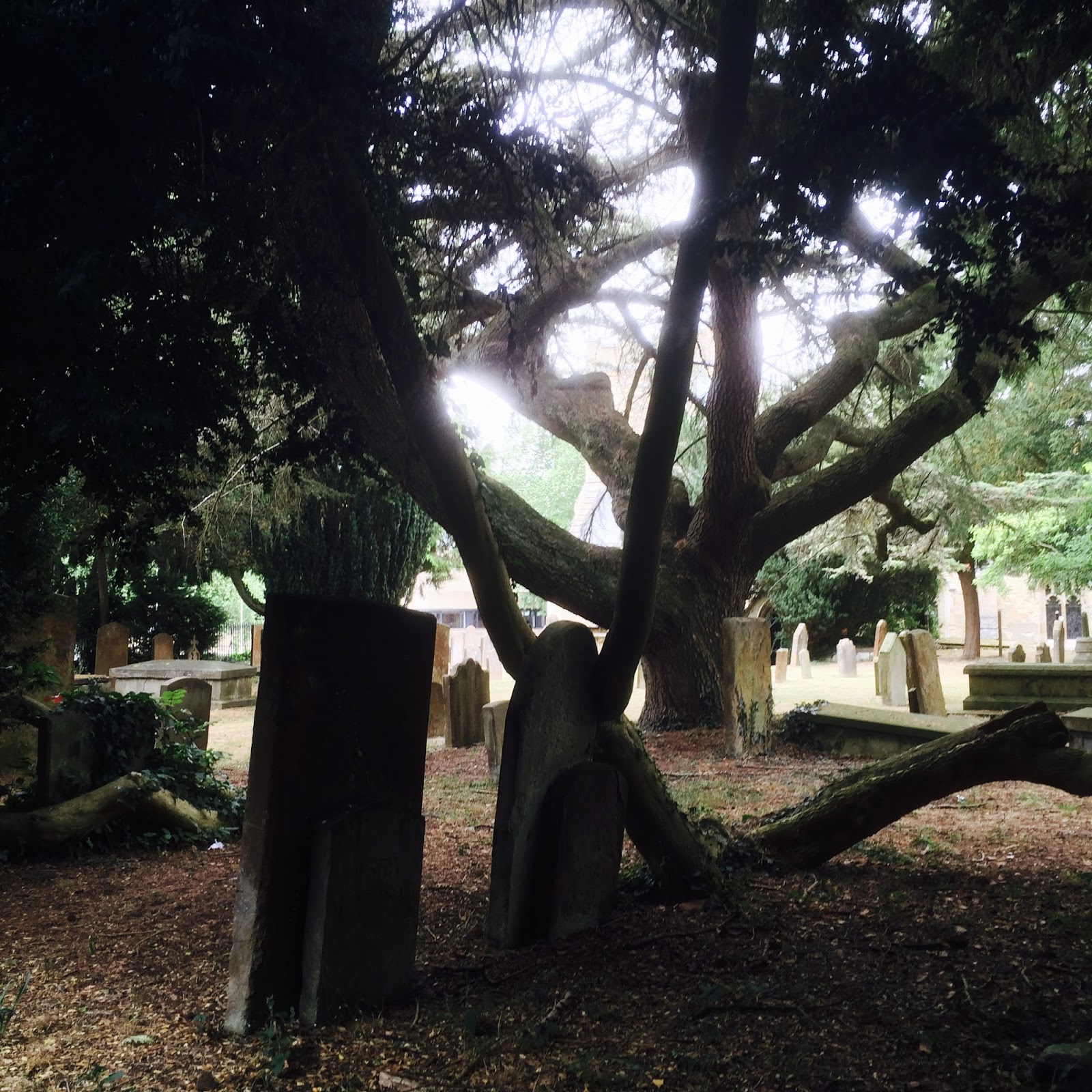
Holywell Cemetery, Oxford—Reflections on Life

Call me morbid, but I love a good cemetery. Ever since I was a child, I would get excited when, on road trips, we passed one I hadn’t explored yet. Needless to say, I was overjoyed that during our time in Oxford last summer we found our way into a few beautiful old cemeteries.


I’m actually really not all that morbid. In fact, horror movies, or anything even mildly reminiscent of them, leave me profoundly shaken afterward. I avoid them at all costs. 

Cemeteries, though, are different. It’s not so much about death. It’s life they remind me of. Lives lived, people loved, stories created—every tombstone has a tale. 

One of the cemeteries we visited, Holywell Cemetery, was filled with graves of famous Oxford men.  There’s something humbling in realising that even the greatest amongst us end the same way. To dust we all return. That sameness in death reminds me of our sameness in life. All these men, no matter how great or little, were just men. They had joys and sorrows, faults and virtues. To borrow a colloquialism, all of them put their trousers on one leg at a time.

One of the most poignant stories told in the tombstones at Holywell is that of Kenneth Grahame, author of The Wind In The Willows. His stone is hard the find (I've included a picture of it at the bottom of this post). The writing is worn-down by time. Grahame was buried there in the same grave as his son, Alastair, who had committed suicide at age twenty about twelves years before.  

Grahame’s epitaph reads:"To the beautiful memory of Kenneth Grahame, husband of Elspeth and father of Alastair, who passed the river on the 6th of July, 1932, leaving childhood and literature through him the more blest for all time.”

A life was lived. Joys and sorrows were experienced. Stories were left behind.

(If you're ever in Oxford, you can find Holywell Cemetery next to St. Cross Church near the intersection of St. Cross and Manor Rd.)


St. Cross Church

Kenneth Grahame and Alistair Grahame's Tombstone

Sunday, October 18, 2015

287 Steps to the Top. Exploring the Scott Monument in Edinburgh.

No trip to Edinburgh is complete without a trip up the treacherous steps of the Scott Monument. And when I say treacherous, I do mean treacherous. The monument was built in 1844, although I have to imagine it was a pretty tight fit for the people then, even if the average person is bigger now. It's 287 narrow and winding steps to the top. The staircase becomes only more narrow and winding the higher up you get. By the end, we were practically bent over double, especially the hubby! 


We chose to visit on an overcast weekday. This meant our view at the top wasn't quite so clear, but it also meant the monument was less crowded. Plus, dreary days (and Scotland has plenty of them!) have their own magic. I've heard the monument can be quite dangerous on a clear weekend. Even on a slower day, it required some fancy footing to pass anyone going the opposite direction. As we were coming down, we passed a Scottish gentlemen and his girlfriend. We were near the top where things were narrowest. I had to stand awkwardly to one side with my body stretched across the hallway, my hands on the opposite wall for balance and support. The couple had to duck underneath my arms like we were in a game of London Bridges and then squeeze past the hubby who was above me where it was even narrower. With typical wry Scottish humor, the man commented, "It's a good thing we all know each other so well. Otherwise, this would be awfully awkward." 

The monument is located at E. Princes St. Garden. It's open April through September from 10-7 on Monday through Saturday and from 10-6 on Sunday. It's open October through March from 9-4 Monday through Saturday and from 10-6 on Sunday. It includes a museum with information on Scott's life and works as well as sculptures of characters from his novels. The trip to the top might be long and a bit tiring, but it's worth it for that beautiful view!


Wednesday, October 14, 2015

A Day In Jiufen, Taiwan

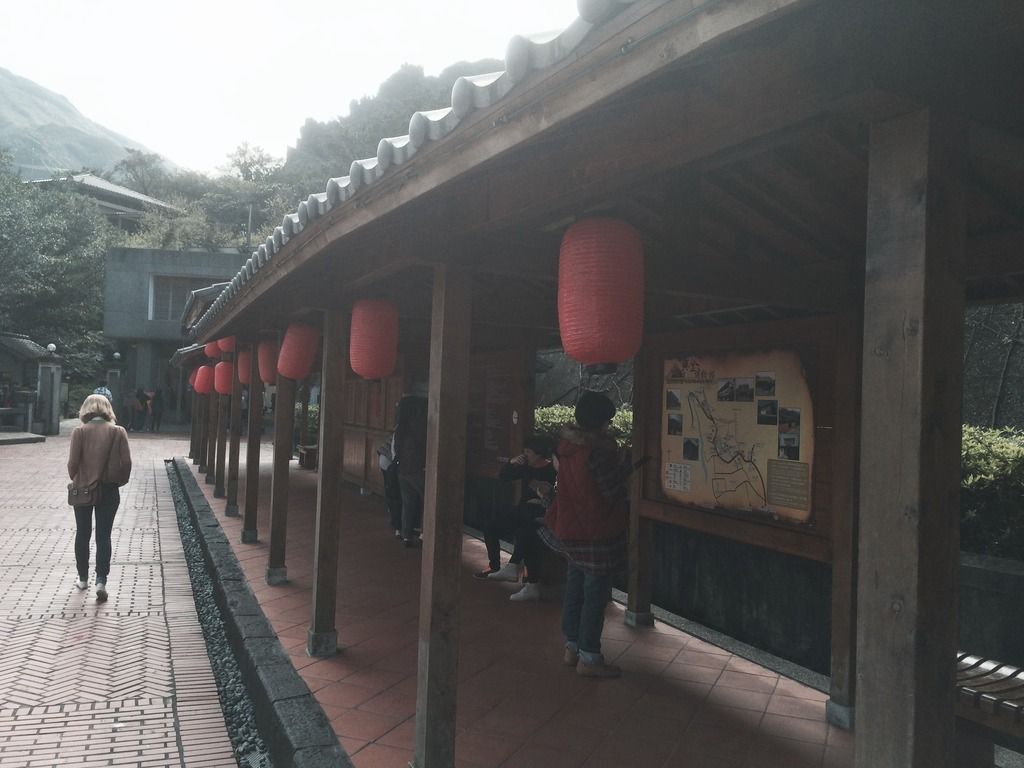
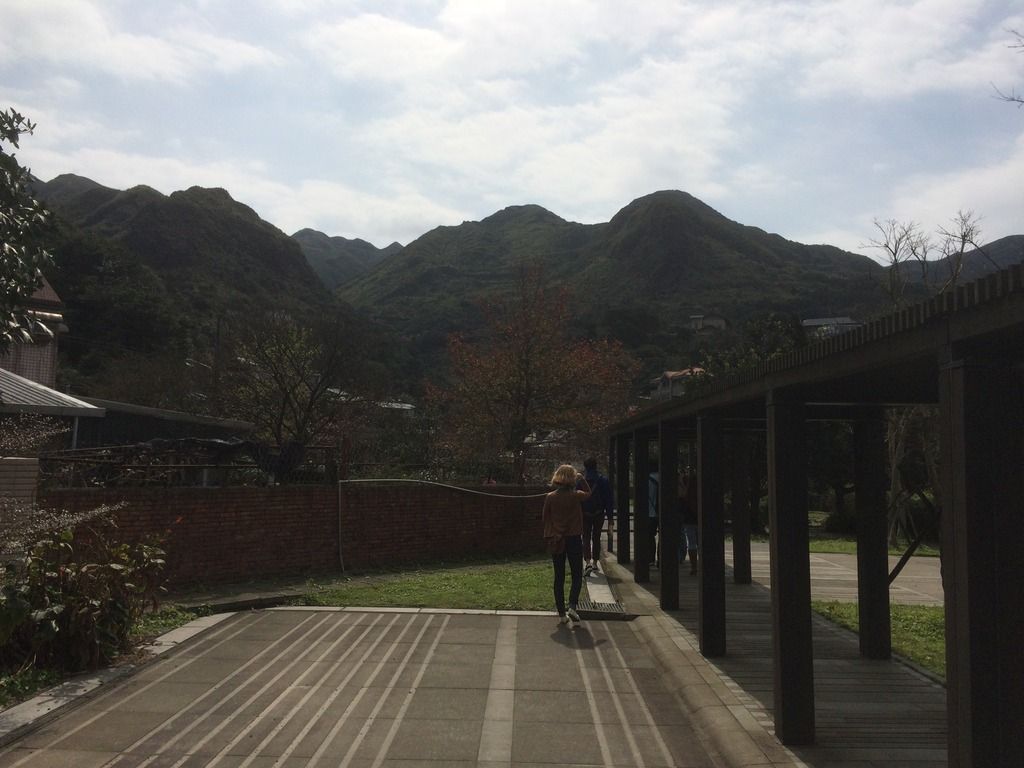
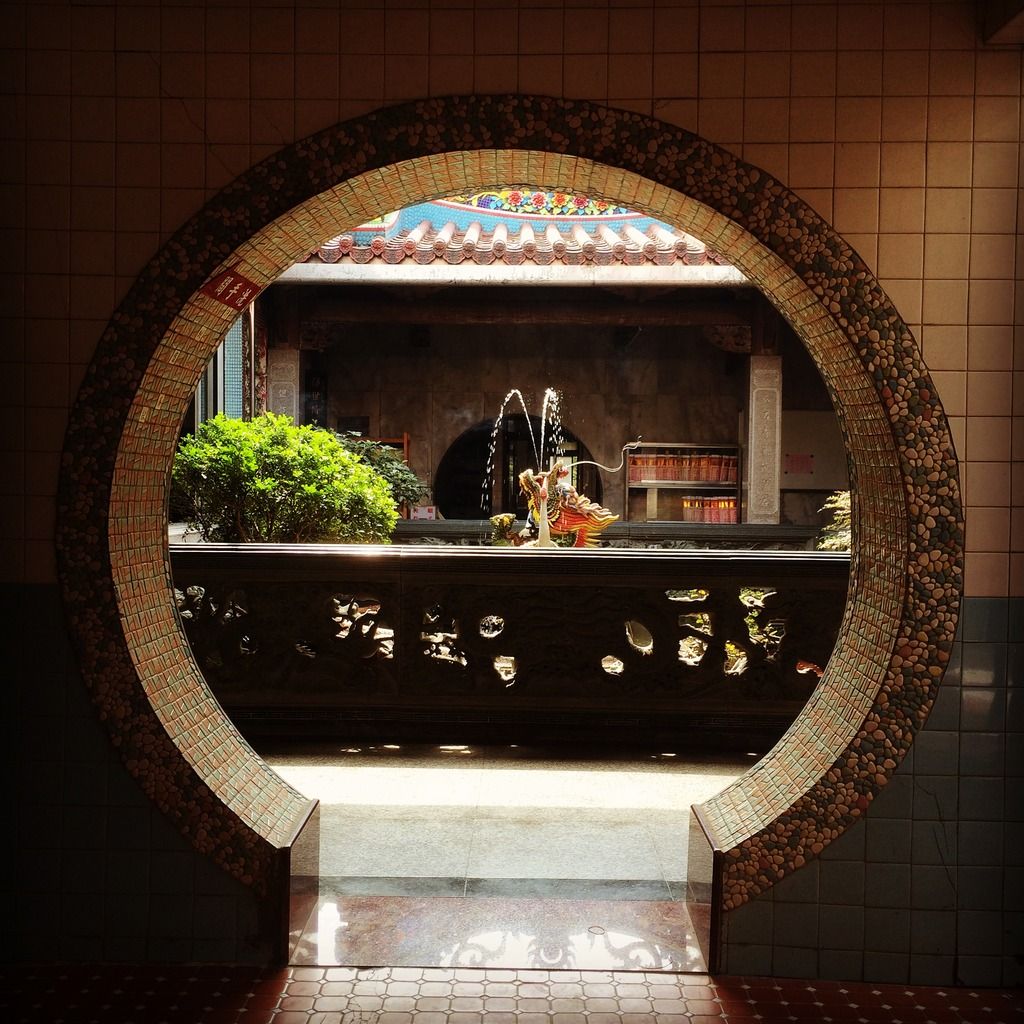
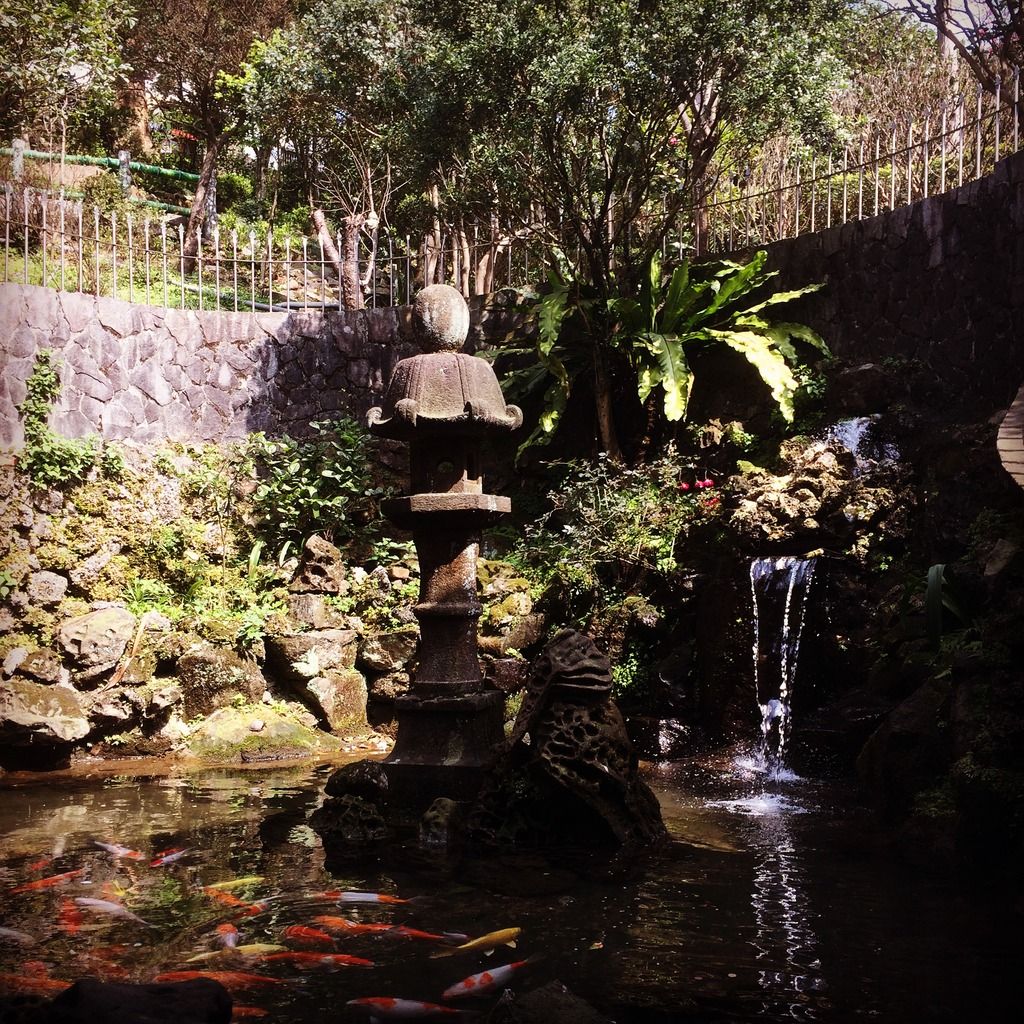
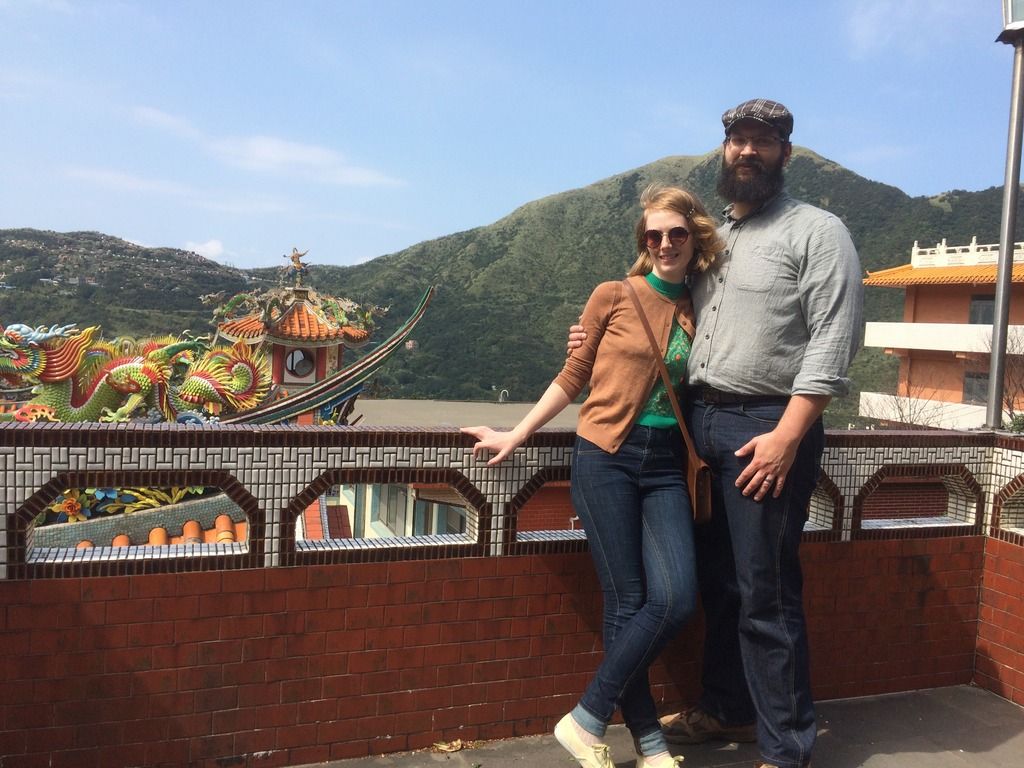
Last Spring, during Chinese New Year break, we took a trip to Jiufen, a magical mountain town about an hour outside of Taipei. About a month ago, we took some visiting friends on the same trip.* It's a trip worth taking, full of history, shopping, food, hikes, and magnificent scenery.

History


The village dates at least back to the Qing dynasty. During its early years, just nine families lived there. When shipments were sent in from the larger towns, they would order nine portions, one for each family. Thus the name Jiufen (Jiǔfèn) which literally means "Nine Portions."   


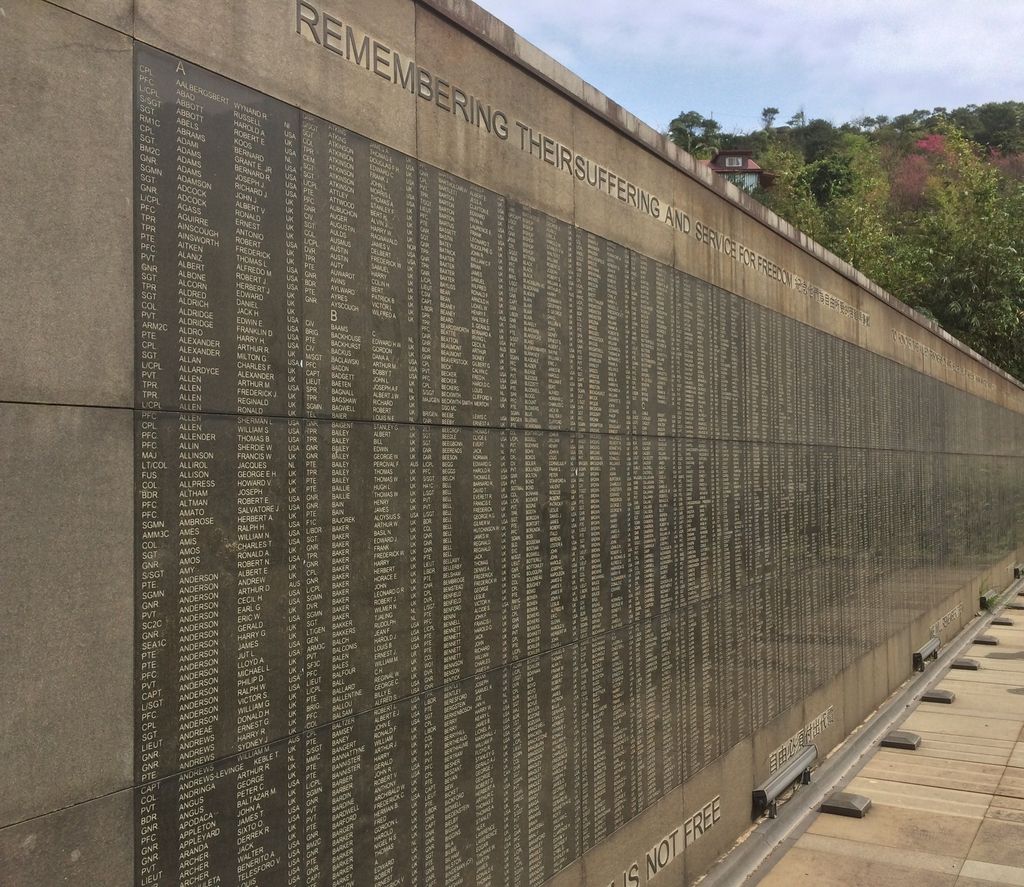
Around the turn of the 20th Century, gold was discovered in the area. This led to a gold rush as well as a Japanese POW work camp which held allied forces during WWII. The mine was closed in the 70s. In the 90s, the town began its new life as a tourist destination.

Jiufen in the Movies

In 1989, the Taiwanese movie A City of Sadness was filmed in Jiufen. Although the hubby and I very much want to watch it, we haven't at this point, so everything I say about it is hearsay. From what I understand, the movie is set in Taipei during the 228 Incident of 1947 when the Republic of China came over from mainland China to Taiwan and, in the process of taking over the former Japanese colony, killed thousands of Taiwanese civilians. By the time the movie was filmed, Taipei had modernized beyond the 1947 setting, so filming was moved to Jiufen. 

Many believe Jiufen is also the inspiration for the market streets in the Studio Ghibli film Spirited Away. 

Getting There

The first time we went to Jiufen, we took the MRT to Nangang Station and connected to the TRA there. We took the TRA to Ruifang and connected to a bus in Ruifang. This trip, we discovered we could take the 1062 Bus directly from Taipei to Jiufen. Much simpler!

What to Do

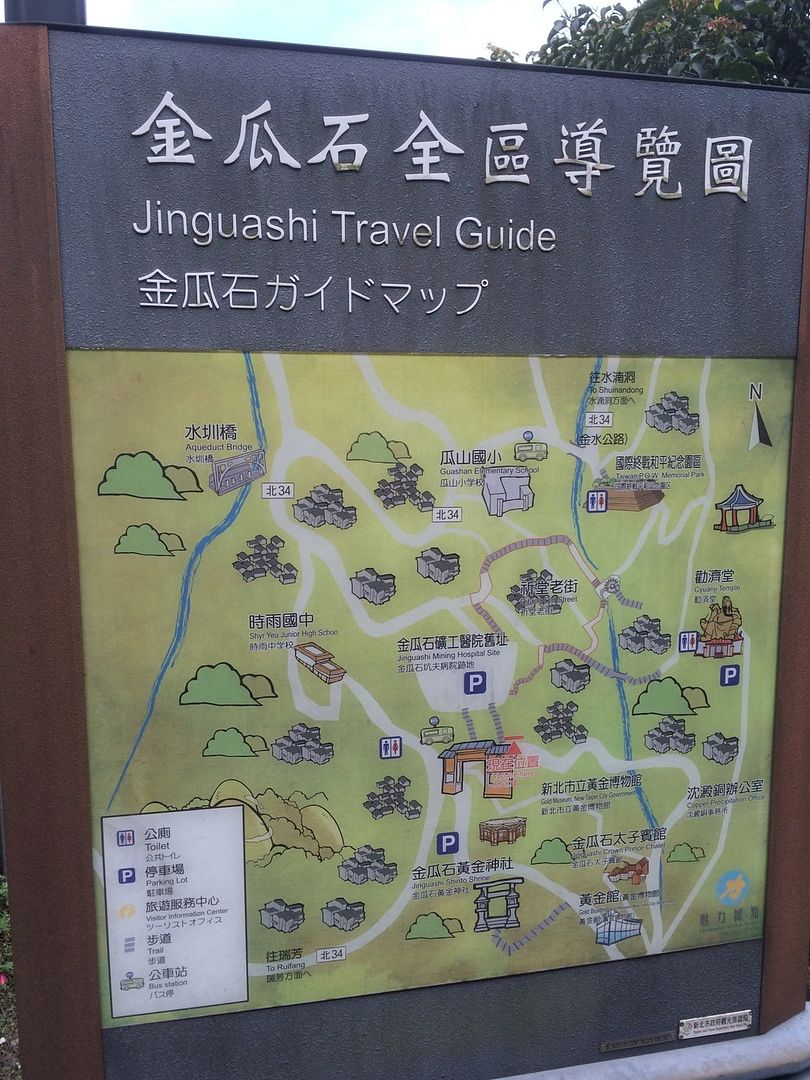
If traveling from Taipei to Jiufen for a day trip, I recommend taking the bus past the popular Jiufen Old Street stop and riding up to the gold mines at JinGuaShi. It just takes a few minutes longer. Up there, you can visit a gold mine museum, walk through restored mining tunnels, tour the grounds of the former Japanese Crown Prince's home, see old homes built for Japanese gold mine workers, visit temples, and visit a monument at the site of the old Japanese POW camp. From one of the temples, you can take stairs further up into the mountains and enjoy breathtaking views of the coast below. You can even see old chimneys from the gold mining days. They travel up the mountainside rather than standing straight up and are a bit hard to spot at first but are apparently some of the world's longest chimneys.


On our first trip, a local Taiwanese man, a recently retired engineer from GE, stopped us and offered a personal tour. He took us around to these different spots and showed shortcuts to some of the beautiful views. He also provided us with a fascinating yet sad perspective of the Republic of China takeover and the 228 Incident. Some of his own uncles were shot during the events. His tour has been a highlight of our time in Taiwan. He wasn't looking for money or favors. He just wanted to share his world with us.


Once you're thoroughly exhausted with all this education and sightseeing, head back down to Jiufen Old Street. On our first trip, we took the bus back down the mountainside. Our second trip, we walked back. Rather than taking the main road, our Google Map directions took us through little side streets, terraced roads with steps, and even through a traditional Chinese cemetery.


Those little buildings with flat roofs are actually grave sites.
Jiufen Old Street is, in and of itself, worth the trip. Really, you could take several trips to the general area to fully experience its delights--one for hiking, one for shopping, and one just for eating. In the market, we enjoyed peanut cilantro ice cream rolls. Apparently this is "Taiwan's Number One Special Treat"! It's really quite delicious, as odd as it sounds. We also munched on food from a number of vendors and explored handicraft booths. We ended the day with a lingering tea at sunset on the rooftop veranda of a traditional tea house.

A beautiful day. A perfect ending.


*The pictures in this post are a hodgepodge from both trips. Photos courtesy of the hubby (as usual!).

Tuesday, September 22, 2015

A New England Yankee in Holyrood Park (July 4th in the UK)

It's been quite awhile since I posted about our time in the UK. I had intended to go in chronological order but find myself veering a bit off course today by sharing a few pictures of our July 4th.

I'm not sure whether celebrating your own traditional holidays in a land where those holidays aren't celebrated makes things more or less meaningful. I suppose it's a bit of both. Christmas in Taiwan and the 4th in the UK both lacked the grandeur of celebrations in the US. However, torn from that grandeur we see year after year and even grow weary of, it was easier to appreciate the substance of the day.

In the long run, I suppose living internationally has helped me value my own heritage more while also valuing and understanding other heritages. I think, too, that the simplicity of our current celebrations will help me appreciate the grandeur of future holidays back in the states. I've boiled own to the substance of things and can now value the celebrations that ensue.

As a side note, it's a bit funny celebrating your independence in the land from which you gained independence. But I took comfort in knowing that Scotland (where we were at the time) has its own history of rebellion against England.

Anyway, without further rambling, here's our July 4th in Holyrood Park, complete with hamburgers and an apple pie (which just happened to be on sale!).


Friday, September 4, 2015

Money Saving Travel Tips: The Historic Scotland Explorer Pass

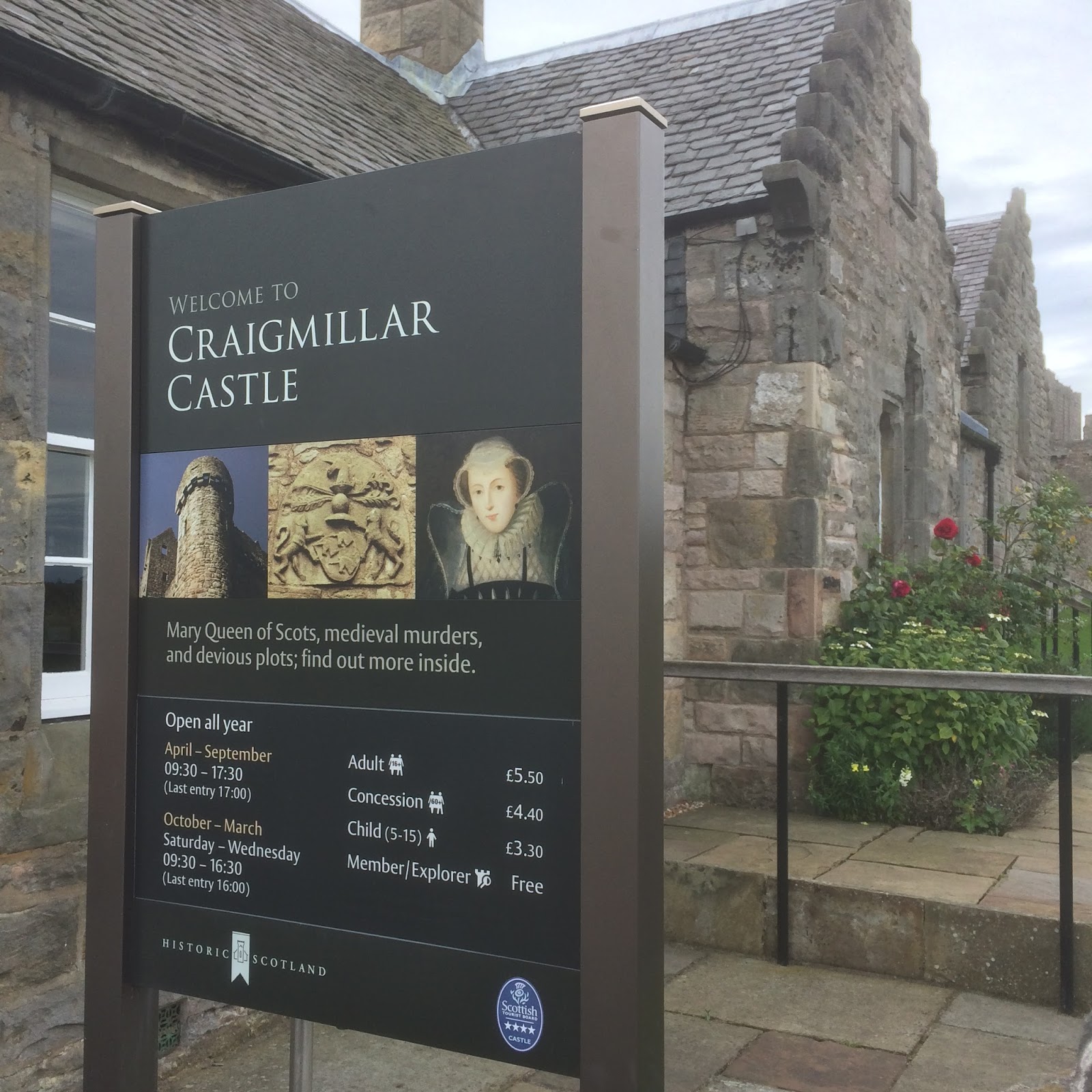
If you're visiting Scotland, you'll want to check out the Historic Scotland Explorer Pass. We actually discovered it quite by accident on a visit to Craigmillar Castle but wish we had known about it sooner. It's definitely worth the money, allowing you to visit multiple historic locations at a reduced rate.


How it Works


It's a bit confusing at first but really quite simple once you understand it. You can buy 3-day pass for £30 or a 7-day pass for £40. The 3-day pass is valid for 5 days from the date of your first visit (this was the date of purchase for us but doesn't have to be). You choose 3 days out of the 5 to visit Historic Scotland locations. On those 3 days, you can visit as many locations as you want for no extra cost. We were given a receipt with 3 spaces at the bottom to right dates on. Each day we went out, we filled in the date. The 7-day pass works the same. You have 14 days to use it but you can only visit Historic Scotland locations for 7 of those days. You can visit as many sites as you want but visit each site only once.


Obviously, the more sites you plan on visiting, the more you'll save. Want to cram in as many historic sites as possible in a week? Get the £40 7-day pass and explore to your heart's content. We loved the flexibility of the pass. We didn't have to use it 3 days in succession but could choose our dates. This was especially nice when we woke up one morning feeling sick and not wanting to go on our planned excursion.

Keep in mind that this pass isn't valid for every historic site in Scotland. It works for the sites operated by Historic Scotland. But there are 78 of those, so you shouldn't run out of options anytime soon!


What We Saved


We visited just 3 castles so our savings were a bit more modest than they could've been. But I'm still quite happy with the results. Here's everything broken down:

Admission Costs Without a Pass 


Craigmillar Castle: £5.50 x 2
Edinburgh Castle: £16.50 x 2
Stirling Castle: £14.50 x 2


Total cost without the Explorer Pass 


£73 for 2 people ($111.64)

Cost of the Explorer Pass 


£60 for a 3-day Family Pass ($91.75)

Total Savings


£13 ($19.89)

Of course, you can get even better mileage out of the pass if you are traveling with a larger family or visiting more locations than we did. We would have loved to explore more castles but were limited to anything accessible by train within an easy day trip of Edinburgh. If you're already renting a car, your options open up!

Our savings might not have been as impressive as they could have been. Still, we were always planning on visiting these castles. We didn't decide to simply because we had an Explorer Pass. It was always on the agenda. And why pay £73 when you can pay £60?

Where We Went


Craigmillar Castle


A friend of mine who just wrapped up a post-grad program at the University of Edinburgh (Congrats, Friend!) told us about this lovely walk through Holyrood Park and into Duddingston Village. Just passed Duddingston Village, she informed us, were the ruins of Craigmillar Castle. Craigmillar Castle was owned by the Preston family but was a favorite retreat from politics and Edinburgh life for Mary Queen of Scots. She stayed there in 1563 and 1566. On her second stay, the Craigmillar Bond was signed by her noblemen there, an agreement to dispose of Mary's unpopular husband, Lord Darnley.


Edinburgh Castle


Edinburgh Castle has a long, storied history. It served as a royal residence and later as military barracks base with a garrison. I won't even attempt to distill its story into a succinct paragraph or two. It's something of an overwhelming experience to visit Edinburgh Castle. It's so full of history. Some highlights of the trip: the Stone of Scone, St. Margaret's Chapel (the oldest building in Edinburgh), royal apartments, prisons, museums, and more. Edinburgh Castle sits high above Edinburgh and is visible throughout the city.


Stirling Castle 


We took the train from Edinburgh to Stirling and then walked up through the city to Stirling Castle. Stirling Castle was a nice middle ground between Craigmillar and Edinburgh. It wasn't ruins like Craigmillar but also wasn't as much of a crowded, built-up, tourist attraction as Edinburgh Castle was. We were also able to jump in on a guided tour at no extra cost. I don't know about all the tour guides, but ours was fantastic! He was full of historical background as well as details about the restoration of the castle. The castle formerly served as a royal residence for Scottish monarch. Mary Queen of Scots was born here and her grandson, Prince Henry (son of James VI of Scotland or James I of England and Ireland) was christened here. James the VI and I, himself, grew up there. The views there are worth a mention, too--breathtaking.